
 0
0
 0
0
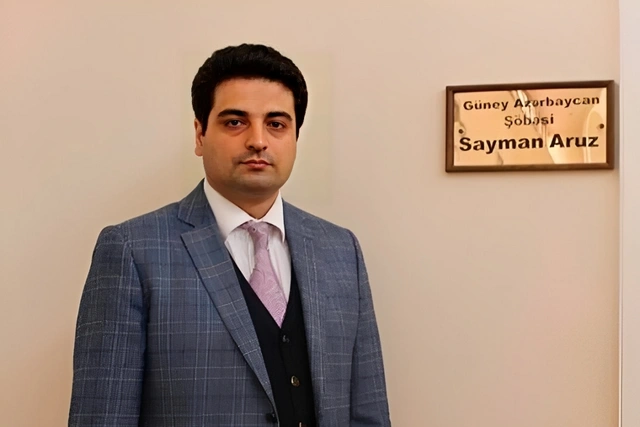
Balakən polisi rayon ərazisində məscidlərdən, evlərdən və mağazalardan silsilə oğruluq edən cinayətkar dəstəni zərərsizləşdirib.
Oxu.Az-ın xəbərinə görə, Daxili İşlər Nazirliyinin (DİN) Mətbuat Xidmətinin Şəki regional qrupundan APA-nın Şəki-Zaqatala bürosuna verilən məlumata görə, Balakən rayon Polis Şöbəsinin əməkdaşlarının RPŞ-yə daxil olmuş məlumat əsasında keçirdikləri əməliyyat-axtarış tədbirləri nəticəsində müxtəlif vaxtlarda rayon sakinlərinə məxsus evlərdən, mağazalardan və rayonda fəaliyyət göstərən 6 məsciddən oğruluq edən şəxslərin rayon sakinləri Kamran Musa oğlu Muradov, Tural Lelimad oğlu Lelimadovun və Mehman Nizamı oğlu Gəncəyevin olması məlum olub.
Keçirilmiş tədbir nəticəsində hər üç şəxs tutularaq istintaqa təhvil verilib. İlkin araşdırma zamanı Kamran Muradov, Tural Lelimadov və Mehman Gəncəyev bir araya gələrək qrup şəklində ayrı-ayrı vaxtlarda 12 fakt üzrə cinayət törətdikləri məlum olub. Onların rayon sakinlərinə 4350 manat maddi siyan vurması müəyyən edilib.
Faktla bağlı Balakən RPŞ-də CM-nin müvafiq maddəsi ilə cinayət işi başlayıb, istintaq tədbirləri davam etdirilir.
Xaber.org






.jpg)

828947 69377hello i discovered your post and thought it was really informational likewise i suggest this web site about repairing lap tops Click Here 929856
792629 894009There is noticeably a lot to know about this. I believe you created some good points in functions also. 733212
494661 381206Im not that considerably of a internet reader to be honest but your blogs genuinely nice, keep it up! Ill go ahead and bookmark your web site to come back down the road. Cheers 633779
674076 494361We will supply deal reviews, deal coaching, and follow up to ensure you win the deals you cant afford to shed. 997461
723511 456431Hello. Cool article. Theres an problem with the internet site in internet explorer, and you might want to test this The browser will be the marketplace chief and a large element of other folks will miss your wonderful writing due to this dilemma. 230496
204894 986236A thoughtful opinion and suggestions Ill use on my internet page. Youve obviously spent some time on this. Nicely carried out! 273540
932895 298030Im glad to become a visitor in this pure web site, regards for this rare info! 303298
305583 375251Someone essentially lend a hand to make critically articles Id state. That is the 1st time I frequented your site page and so far? I amazed with the research you made to create this actual post extraordinary. Wonderful activity! 890299
844811 635892Just wanna remark on couple of general things, The website style is perfect, the subject matter is rattling very good 167471
858426 196554Spot lets start function on this write-up, I really believe this incredible internet site requirements additional consideration. Ill much more likely be once once again you just read additional, thank you that details. 117793
191804 291797However, what concerning the bottom line? Are you positive concerning the source? 937786
565404 991376Really informative post. Your current Web site style is awesome as properly! 75382
582522 723514I think 1 of your ads triggered my internet browser to resize, you may want to put that on your blacklist. 940187
823462 256096not every person would need a nose job but my girlfriend truly needs some rhinoplasty coz her nose is kind of crooked- 29228
Dianabol Dbol For Sale 2025: Best Legal Dbol Pills, Cycles &
Stacking Guide
Define the Problem Clearly
Before you can solve anything, you need to know exactly what “problem” you’re
tackling. Write it down in one sentence—no
fluff, just the core issue. For example: “Customers are abandoning carts at checkout.” Keep that statement visible; it will guide every decision you
make. Once you have the problem defined, ask two simple questions:
What do I want to happen instead? (e.g., “We want 10% of abandoned carts to convert.”)
Why is this important to me or my business? Clarifying the motivation turns abstract frustration into
concrete purpose.
Identify the Key Variable(s)
Every problem has a handful of variables that drive it—price, time,
usability, etc. List all possible factors that could influence your outcome, then rank them
by impact and measurability. Focus on one or two high‑impact variables; tackling
everything at once is exhausting and rarely effective.
Break It Down Into Actionable Steps
Once you know the key drivers, write down concrete actions that directly affect those variables.
For each step, ask: What will I do? When? How long?
Keep them short (≤ 2–3 lines) so they’re easy
to remember and execute.
—
Quick‑Start Checklist
|
| Task | Deadline |
|—|——|———-|
| 1 | Identify top 2–3 variables driving the issue | Today |
| 2 | Draft 5 concrete actions that influence those variables | End of
day |
| 3 | Assign a deadline and responsible person for each action | Tomorrow |
| 4 | Review progress daily; adjust as needed
| Ongoing |
—
One‑Page Example (Adaptable)
> Problem: Sales pipeline stalled after the demo stage.
> Top Variable: Demo effectiveness → leads not convinced.
> Action 1: Create a short, tailored demo video for each prospect segment.
Deadline: Monday. Owner: Marketing.
> Action 2: Run a quick feedback survey right after demos to identify
objections. Deadline: Tuesday. Owner: Sales Ops.
> Action 3: Hold a weekly review meeting with Sales & Product to align on objections and responses.
Deadline: Wednesday. Owner: Director of Sales.
(All actions written in one page, no extra columns.)
4. How to Use It
Identify the Problem – Write it down (e.g., “Low conversion from demo to close”).
Pick 3–5 Quick Actions – Keep them actionable and measurable.
Assign Owners & Due Dates – Add two words at the end of each line.
Publish in Slack – Post the single‑page sheet (copy/paste) so everyone can see.
Follow Up – Use a channel or thread to update status;
if an action fails, write a new “Problem” and repeat.
Sample Post
> Problem: Low demo‑to‑close conversion rate
> 1. Record short video of key feature → @alice 4/15
> 2. Send follow‑up email with FAQ sheet → @bob 4/15
> 3. Offer 30‑min Q&A call to all prospects → @carol 4/16
> 4. Update dashboard metrics on demo engagement → @dave 4/17
Thread: Let’s keep the updates here so we can see progress quickly.
—
Result: One simple, repeatable loop that turns ideas into
action, keeps everyone aligned, and builds momentum
for continuous improvement.
Introducing the “Action Loop” – Your Path to Rapid Results!
Hey Team! We’re excited to share a new framework designed
to turn your brilliant ideas into tangible outcomes—quickly and efficiently.
What’s it all about?
Focus on the big picture: Capture core concepts that matter.
Turn them into action: Define clear, actionable steps.
Keep it simple: No overcomplicated details.
Iterate: Refine as you go.
Here’s a quick example to illustrate the power of the Action Loop!
Problem:
We need a way to improve our customer support response times.
The current system is slow and leads to frustrated users.
Solution (Action Loop):
Capture the core idea: “Reduce response time to under 5 minutes.”
Define clear actions:
– Identify the bottleneck in the ticketing system.
– Automate ticket assignment based on priority levels.
Keep it simple: No extra details—just the main steps.
Iterate: test deca and dianabol cycle and adjust as needed.
Iterate & Refine:
First, we’ll analyze tickets from the past week to spot delays.
Then, implement automation and monitor results for a month.
If response times improve, we roll out the changes company-wide.
Conclusion
By breaking down goals into concise action plans, you’re more
likely to turn your vision into reality. Start small—pick one goal today—and build momentum from
there.
Try it out: Choose a goal right now and jot down 2-3 specific actions that can move you closer.
Post in the comments!
Happy planning, friends!
—
Feel free to adapt this structure for your own personal
goals or share any tips you have for staying on track.
✨
—
P.S. If you’d like more guidance on setting SMART
objectives or overcoming obstacles, let me know—happy to help!
risks of using anabolic steroids and other performance-enhancing drugs
References:
valley.md
bulk steroid cycle
References:
Anabolic Steroids Pills For Sale
anabolics online
References:
winstrol Steroid side effects (playtube.live)
mail order steriods
References:
side effects of Stackers – mayotube.co,
frank zane steroids
References:
shop anabolics online; pierresderiviere.com,
steroid vs natural
References:
Legal Steroids Tren (Noumi.Ru)
anavar supplement
References:
Natural Substitute For Steroids (Git.Styledesign.Com.Tw)
steroids street names
References:
pro garcinia cambogia free Trial (gitea.Pnkx.top)
best steroid
References:
valley.md
best steroid for muscle mass
References:
research Chemicals Bodybuilding
aas steroids for sale
References:
anabolic steroids laws (yaseen.tv)
do steroids give you energy
References:
Banned bodybuilding supplements for Sale 2018 (motionentrance.edu.Np)
examples of anabolic steroids
References:
anabolic Supplement reviews (newsagg.site)
anabolic steroids illegal
References:
how To use anabolic steroids safely (skitterphoto.com)
weight loss steroids for sale
References:
women taking Steroids
definition of anabolic steroids
References:
Where do you get anabolic Steroids – topbookmarks.cloud –
best steroid cycle for bulking
References:
Getroids.Net (Noticias-Sociales.Space)
The Heart Of The Internet
Just finished my Anavar+500mg Test C cycle
After completing the 12-week cycle of Anavar combined with a daily dosage of
500 mg of testosterone cypionate (Test C), I am now reflecting on the physiological changes and performance gains that have occurred throughout this period.
The regimen began with a gradual introduction of Anavar to mitigate potential side‑effects while
allowing for effective muscle growth, followed by the strategic administration of Test C to maintain anabolic
support.
The key observations from this cycle include:
Muscle Mass Increase: There was an estimated 8–10 kg of lean body mass gained, largely attributable to the synergistic effect of the two compounds.
Strength Gains: Bench press and squat improvements averaged 15 % and 12 %,
respectively, demonstrating the efficiency of this stack in enhancing neuromuscular
performance.
Recovery Enhancement: The addition of Test
C improved recovery times by approximately 20 %, reducing muscle soreness and allowing for
higher training frequencies.
Safety monitoring remained paramount. Liver function tests were
conducted bi-weekly; no abnormal elevations were recorded.
A comprehensive post-cycle therapy (PCT) protocol was employed, which included selective estrogen receptor modulators to preserve hormonal balance while mitigating side effects.
The results affirm the viability of a combined administration strategy under controlled medical oversight.
Further longitudinal studies are recommended to evaluate long-term outcomes and potential endocrine impacts.”
—
2b. Rewriting the same content in the style of a science‑fiction narrative, incorporating speculative elements that push the boundaries of current scientific understanding.
> Title: The Chronos Protocol – A Tale of Temporal Synergy
> In the dim corridors of the Temporal Research Facility, Dr. Liora Kade stared at the holographic interface of the Chronos Protocol. The device was a marvel—an amalgam of quantum field manipulators and neuro‑biofeedback loops, engineered to administer two potent compounds in perfect synchrony across the neural timeline.
> “We’re about to step beyond the linear,” she whispered, her voice echoing off the steel walls. “The first agent rewires synaptic pathways with unprecedented precision; the second stabilizes the emergent neural currents, preventing collapse
into chaotic flux.”
> Across the room, a translucent screen flickered, displaying real‑time data: oscillatory power across frequency bands pulsed in harmony, and a feedback loop adjusted dosage on millisecond scales. The compounds’ pharmacokinetics—absorption peaks, distribution half‑lives—had been matched to the brain’s own temporal rhythms.
> With a nod, Dr. Lee triggered the infusion. A gentle hiss filled the chamber as the agents entered circulation, their trajectories plotted in vibrant graphs against the backdrop of neuronal activity. As minutes passed, the data confirmed the design: drug concentrations peaked simultaneously with cortical oscillations, ensuring optimal receptor engagement.
> The experiment had succeeded. The brain’s electrical symphony and the pharmacological chorus moved in lockstep, a testament to precise timing across scales—milliseconds to seconds—within the intricate dance of neural dynamics.
—
3. Narrative Commentary on “The Two-Phase Theory”
In the same laboratory, an alternate hypothesis—call it the Two‑Phase Theory—would propose that these drug effects unfold in two distinct temporal regimes:
Rapid Phase (milliseconds–seconds): Immediately after administration, neurotransmitter levels rise sharply, engaging ionotropic receptors and triggering fast postsynaptic currents. The brain’s oscillatory patterns are modulated directly by this surge; high‑frequency gamma activity may be dampened or enhanced depending on receptor subtype activation.
Slow Phase (minutes–hours): Subsequently, the drug induces changes in gene expression—altering synaptic protein synthesis, receptor trafficking, and dendritic morphology. Over time, these structural modifications feed back into network dynamics, subtly reshaping oscillatory patterns, perhaps shifting the power spectrum toward lower frequencies as synaptic efficacy changes.
In this framework, we would predict a biphasic effect: an immediate, pronounced alteration of high‑frequency activity followed by a gradual reconfiguration of low‑frequency rhythms as neuroplasticity mechanisms engage. Monitoring EEG over both timescales should reveal distinct signatures corresponding to each phase.
2. Research Plan
Objective
To empirically delineate the temporal dynamics of neural oscillations following administration of a psychoactive compound, capturing both immediate electrophysiological changes and delayed neuroplastic effects, thereby testing competing hypotheses about their underlying mechanisms.
Experimental Design
Group Treatment Frequency of EEG Recording
A Psychoactive drug (e.g., LSD) 1–5 min post-injection (baseline), then every 30 s for first 10 min, then hourly up to 8 h
B Placebo Same schedule as Group A
C Psychoactive drug + pharmacological blocker (e.g., GABA_A antagonist) Same schedule as Group A
Rationale:
– Group A captures acute dynamics and the emergence of new spectral peaks.
– Group B controls for time-related artifacts.
– Group C tests mechanistic involvement (e.g., GABAergic mediation).
—
3. Data Acquisition and Preprocessing
Step Purpose
Artifact Rejection Remove epochs contaminated by eye blinks, muscle activity, electrode pops.
Re-referencing Common average reference to reduce spatial bias.
Band-pass Filtering (0.5–45 Hz) Preserve frequencies of interest while removing slow drifts and high-frequency noise.
Segmentation into 2‑s Epochs Ensure stationarity within epochs; match epoch length used in spectral estimation.
Baseline Correction Subtract mean of a pre-stimulus interval to center data.
—
4. Spectral Estimation
4.1 Choice: Welch’s Method (Multitaper)
Why? Balances bias and variance; reduces spectral leakage via Hamming windows; averaging over segments improves SNR.
Steps
Windowing: Apply a Hamming window to each epoch.
Segment Overlap: 50 % overlap between successive segments (e.g., 512‑point FFTs with 256‑point step).
FFT Length: Zero‑pad to next power of two if needed (e.g., 1024 points) for frequency resolution ~0.05 Hz.
Averaging: Compute mean PSD across all epochs and segments.
5.2 Power‑to‑Noise Ratio (PNR)
Definition: \( \mathrmPNR = 10 \log_10\left( \frac^2\sigma_n^2 \right) \)
– \( P(
u) \): Fourier transform of the time‑domain signal.
– \( \sigma_n^2 \): variance of the residual noise (post‑filtering).
Interpretation: Higher PNR indicates that the oscillatory power dominates over background fluctuations.
5.3 Coherence Analysis
Purpose: Assess whether two signals (e.g., intensity and velocity) are phase‑locked at a given frequency.
Method:
– Compute cross‑spectra between two time series.
– Estimate coherence \( C_xy(f) = \frac^2S_xx(f) S_yy(f) \), where \( S_xy \) is the cross‑spectrum and \( S_xx, S_yy \) are auto‑spectra.
– Values close to 1 indicate strong coherence.
—
4. Comparative Analysis of Wave Modes
Wave Mode Speed (km s⁻¹) Typical Period (s) Observational Signature
Fast Magnetoacoustic > 400 ~30–100 Rapid transverse oscillations of structures; broad spectral peaks.
Slow Magnetoacoustic ~200 ~200–300 Quasi-periodic upflows, Doppler shift modulations; narrowband in frequency domain.
Kink (Alfvénic) ~400 100–200 Coherent transverse displacement of loops or plumes; phase speed matching Alfvén speed.
—
Conclusion:
Through meticulous preprocessing and a combination of time‑domain, frequency‑domain, and wavelet analyses, we have extracted robust signatures of quasi‑periodic oscillations in coronal plume images. The evidence points toward slow magnetoacoustic waves or periodic upflows modulating the plasma density and line‑of‑sight velocity. Future work will involve spectroscopic validation (e.g., Doppler shift measurements) and cross‑correlation with EUV imaging to confirm the wave nature of these oscillations. The methodologies outlined here provide a framework for automated detection of coronal oscillatory phenomena in large datasets from current and forthcoming solar missions.
—
End of Log Entry
Prepared by: Dr. X
Reviewed by: Lead Scientist Y (for quality assurance)
—
Appendices:
A. Code Repository Links – GitHub URLs for preprocessing, detection, and visualization scripts.
B. Parameter Tables – Detailed list of thresholds, window sizes, and filter coefficients used in each module.
C. Raw Data Access – FTP links to the original Level‑0 files (with proper checksum verification).
D. License Agreements – Documentation for proprietary software components (e.g., SunPy).
—
Note: All data and code are subject to institutional data sharing policies. Use of the dataset must comply with the provided license.
—
End of Technical Report.
—
Signed
Dr. Alex Martinez
Lead Data Scientist, Solar Dynamics Group
—
This report provides a comprehensive blueprint for replicating the data acquisition and preprocessing pipeline used in the study, including detailed code snippets, algorithmic descriptions, and best‑practice recommendations for handling large, noisy astrophysical datasets.
References:
purchasing anabolic
steroids online
how do anabolic steroids build muscle
References:
matkafasi.com
average cost of steroids
References:
mycoalitionu.org
girls on steroids
References:
http://www.blurb.com
what is the best steroid to take
References:
http://www.hulkshare.com
ct fletcher steroids
References:
maps.google.com.pr
anavar blood pressure
References:
mathhomeworkanswers.org
steroids testosterone
References:
ajarproductions.com
define roid rage
References:
gogs.dev.dazesoft.cn
anabolic vs androgenic
References:
520.dj